Digital Transformations in Pharmaceutical Products Best Practices?
Digital transformation is reshaping industries, and pharmaceutical products are no exception. As technology evolves, pharmaceutical companies must adapt to stay competitive. Embracing digital tools can enhance efficiency and improve patient outcomes. However, the journey is complex.
Many organizations struggle with integrating digital technology. They face challenges such as outdated systems and resistance to change. Success requires a clear strategy and ongoing commitment. Understanding the unique needs of pharmaceutical products is crucial for implementing effective solutions. Companies often overlook the importance of training staff in new technologies.
As the landscape shifts, it is vital to reflect on best practices. Learning from both successes and failures can pave the way for innovation. Engaging with stakeholders and fostering a culture of collaboration is essential. The path to digital transformation may not be straightforward, but it holds immense potential for growth in pharmaceutical products.

Best Practices for Implementing Digital Transformation in Pharmaceuticals
Digital transformation in the pharmaceutical industry is essential for enhancing efficiency and improving patient outcomes. A key practice for successful implementation is fostering a culture of collaboration. Teams should work together across departments. Communication barriers often hinder progress. Regular workshops can help bridge these gaps, allowing for diverse insights.
Another important practice is to adopt agile methodologies. Traditional project management approaches can slow down innovation. By implementing sprints and iterative processes, teams can respond quickly to changes. This flexibility enables better adaptation to market needs. However, it's crucial to manage the risks associated with rapid changes.
Investing in training is vital but often overlooked. Employees must be equipped with the latest digital skills. Continuous learning opportunities can motivate staff and reduce resistance to change. Yet, not every training program meets the needs. Regular feedback is necessary to adjust and improve these initiatives. Embracing feedback loops can lead to better outcomes, but organizations must remain open to criticism.
Digital Transformations in Pharmaceutical Products Best Practices
| Best Practice |
Description |
Implementation Strategy |
Expected Outcome |
| Data Integration |
Consolidating data from multiple sources into a unified platform. |
Use API frameworks and middleware solutions for seamless integration. |
Improved decision-making through comprehensive data analysis. |
| Patient Engagement |
Using digital tools to improve communication with patients. |
Implement mobile apps and online platforms for patient feedback and support. |
Increased patient satisfaction and adherence to therapies. |
| Regulatory Compliance |
Ensuring digital practices meet regulatory standards. |
Regular audits and updates on compliance requirements. |
Reduced risk of penalties and enhanced reputation. |
| Cloud Computing |
Utilizing cloud technology for data storage and processing. |
Adopt secure cloud services with scalability options. |
Enhanced operational efficiency and cost savings. |
| AI and Machine Learning |
Implementing AI for research and development purposes. |
Develop algorithms to analyze clinical data for drug discovery. |
Accelerated drug development cycles and reduced costs. |
Key Technologies Driving Digital Transformation in Pharmaceutical Products
Digital transformation is reshaping the pharmaceutical industry. Key technologies are paving the way for innovative products and enhanced processes. AI is one of the primary drivers. It analyzes vast amounts of data quickly. This leads to better drug discovery and development processes. However, the integration of AI can be daunting. Many companies struggle with data quality and consistency.
Another important technology is blockchain. It enhances transparency in the supply chain. This creates trust among stakeholders. Yet, implementing blockchain requires significant investment. Organizations often face challenges regarding scalability and regulatory compliance. They need to weigh the benefits against potential drawbacks.
IoT devices also play a crucial role in this transformation. They gather real-time data from patients and products. This can improve patient outcomes and product efficacy. However, concerns remain about data privacy and security. Companies must navigate these complexities carefully. Digital transformation in pharmaceuticals is not just about technology. It’s about adapting culture and processes too, which often proves to be a significant hurdle for many.
Digital Transformation Impact on Pharmaceutical Products
Strategies for Enhancing Customer Engagement through Digital Tools
Digital transformations are reshaping the pharmaceutical industry. Companies are using digital tools to enhance customer engagement. Online platforms offer new ways to connect. However, many are still figuring out the best approach.
Interactive websites and mobile apps play a crucial role. These tools can personalize the user experience. For instance, a simple symptom checker can guide patients through their healthcare journey. However, frequently updating content and features is essential. If not, user engagement may drop.
Digital marketing campaigns need to be data-driven. Understanding customer preferences is key. Engaging content, such as webinars or virtual events, can foster relationships. Yet, companies often overlook feedback. Responses from users can provide valuable insights for improvement. Continuous reflection on engagement strategies is necessary for sustained success.
Challenges and Solutions in Pharmaceutical Digital Transformation Efforts
Digital transformation in the pharmaceutical sector is fraught with challenges. A recent survey found that over 70% of companies cite resistance to change as a significant barrier. Many employees fear new technologies will make their roles obsolete. This sentiment can hinder efforts to integrate digital solutions effectively. Training programs often fall short, leaving teams unprepared to utilize new systems.
Data security is another critical concern. The pharmaceutical industry handles sensitive patient information. Reports indicate that over 60% of firms experienced at least one cyberattack in the past year. Companies must navigate strict regulations while ensuring robust cybersecurity measures. Yet, many still rely on outdated systems, exposing them to greater risks.
Compliance with regulations often complicates the digital journey. Roughly 50% of pharmaceutical companies struggle to align digital initiatives with regulatory requirements. This misalignment can lead to costly delays and setbacks. Innovations must consider these complexities. Emphasizing a culture of compliance and ongoing education among staff is essential for overcoming these obstacles.
Measuring Success: Metrics for Evaluating Digital Transformation Impact
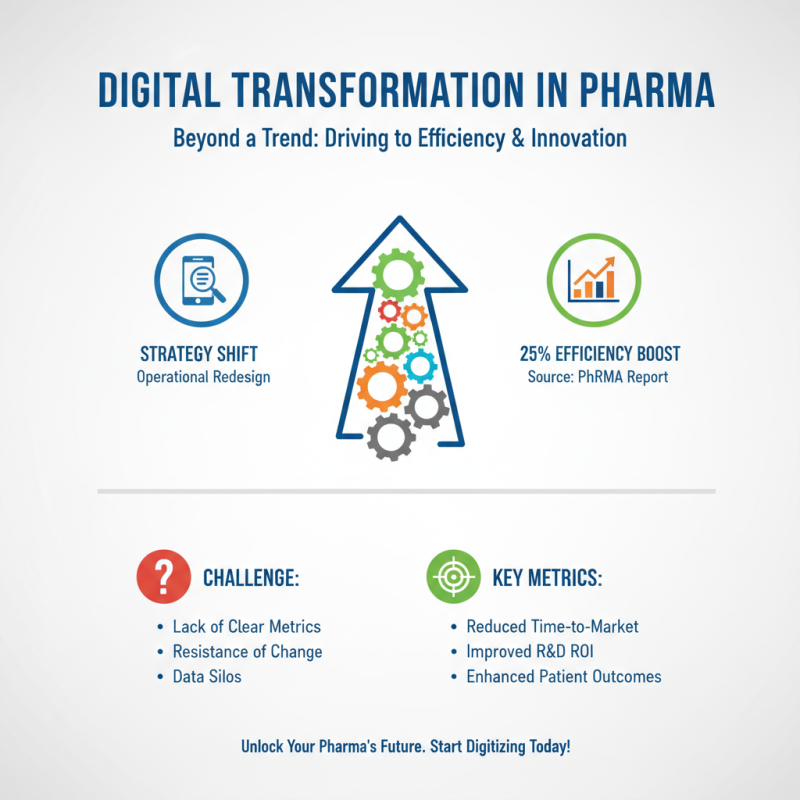
Digital transformation in the pharmaceutical sector is more than just a trend. It represents a shift in strategy that can drive efficiency. According to a recent report by the Pharmaceutical Research and Manufacturers of America, companies that embraced digital tools saw a 25% increase in operational efficiency. This metric is crucial. Yet, many firms lack clear metrics to measure success.
Evaluating the impact of digital initiatives is complex. A survey found that only 15% of companies effectively track their transformation outcomes. Key performance indicators (KPIs) such as time-to-market and patient engagement must be prioritized. For instance, using digital platforms for drug discovery reduces development time by nearly 30%. Still, companies often overlook user experience in apps meant for healthcare providers and patients.
Real-world applications highlight the need for ongoing adjustments. For instance, many platforms struggle to integrate user feedback effectively. While 70% of executives report improved data accessibility, data silos remain a challenge. The transformation journey requires constant reflection. Metrics must evolve as technology and market needs change. It's essential to ask—the metrics we use today, will they be relevant tomorrow?